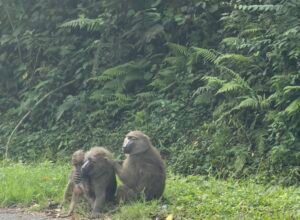
Chimpanzees are our closest living relatives, offering a peek into the complex world of primate behavior. These great apes are known for their intelligence and social skills. They help us understand how humans evolved and our shared roots.
Their social structures and communication methods are intricate. They use tools and solve problems with ease. This shows how similar yet different their behavior is from ours.
Studying chimpanzees helps us grasp primate intelligence and evolution. It shows the diversity of life on Earth. By learning from these creatures, we appreciate our shared traits and unique abilities.
Key Takeaways
- Chimpanzees have complex social structures with alpha males and female alliances.
- They communicate through vocalizations, gestures, and facial expressions, showing their emotional intelligence.
- Chimpanzees use tools for hunting, foraging, and solving problems, showcasing their cognitive abilities.
- Maternal care and offspring development are key in passing on cultural knowledge and shaping behavior.
- Chimpanzees exhibit social behaviors like conflict resolution, empathy, and social learning, revealing their emotional depth and social sophistication.
Social Structure and Hierarchy in Chimpanzee Communities
Chimpanzee society is complex and ever-changing. It has a clear social hierarchy and important roles for alpha males and female alliances. Knowing how these groups work is key to understanding their chimpanzee society.
Alpha Males and Their Role
The alpha male is at the top of the hierarchy. He’s charismatic and dominant, leading the group. He makes big decisions, defends the territory, and keeps order.
His leadership and bold actions earn respect and obedience from others.
Female Relationships and Alliances
Female chimpanzees also play a big role in the social hierarchy. They form strong alliances and networks. These help them navigate the group’s complex social dynamics.
These female relationships greatly affect power and stability in the chimpanzee society.
Group Dynamics and Power Shifts
The social structure of chimpanzee communities changes over time. Power can shift due to new alpha males, female alliances, or outsiders. These changes affect the group’s unity, decision-making, and overall health.
“The social life of chimpanzees is a fascinating tapestry of power, alliances, and constantly shifting dynamics, revealing the complexity of their chimpanzee society.”
Communication Methods Among Chimpanzees
Chimpanzees, our closest living relatives, have amazing ways to talk to each other. They use primate vocalizations, gestural communication, and facial expressions to share feelings and plans. Their chimpanzee language shows us how human communication might have started.
Chimpanzees have a wide range of sounds they make. Scientists have found over 30 different primate vocalizations in their groups. These sounds can mean things like “danger,” “food,” or “hello.” They also use body language to send messages.
Facial expressions are key in chimpanzee talk too. They show emotions like anger, fear, joy, or excitement. By studying these expressions, scientists learn a lot about chimpanzee social life.
The chimpanzee language is more than just sounds and gestures. It’s a complex way of talking that changes based on the situation. By mixing sounds, gestures, and facial expressions, chimps can share detailed messages. This gives us a peek into how human language might have begun.
Tool Use and Problem-Solving Abilities
Chimpanzees, our closest living relatives, have amazed scientists with their smart thinking. They are great at using tools and solving problems. They make hunting tools and find new ways to get food, showing how smart they are.
Hunting Tools and Techniques
Chimpanzees are good at hunting, using tools to catch their prey. They make spears from tree branches and sharpen them. This shows they can plan and make complex hunting strategies.
Food Gathering Innovations
Chimpanzees are also smart when it comes to finding food. They use sticks to get termites and make tools to reach hard-to-get fruits and nuts. This shows how they learn and share knowledge with each other.
Learning and Cultural Transmission
- Chimpanzees learn from each other, especially the young ones watching the elders.
- This learning helps their communities get better at solving problems over time.
- Different groups of chimpanzees use different tools and ways to find food, showing they learn from each other.
Chimpanzees’ tool use and problem-solving show how smart they are. It gives us a peek into their intelligence and helps us understand human evolution better.
“Chimpanzees, in their use of crude tools, foreshadow more advanced stone tool use by early humans.”
Maternal Care and Offspring Development
Female chimpanzees show amazing maternal instincts and care. They form a strong bond with their young. This bond is key for the young ones’ growth and learning.
Chimpanzee moms are very protective of their babies. They carry and cuddle them for years. This bond is vital for the baby’s health and learning.
- Mothers groom, hold, and nurse their infants, fostering a sense of comfort and attachment.
- Infants learn crucial skills, such as tool use and foraging techniques, by observing and imitating their mothers.
- The early years spent with the mother shape the chimpanzee parenting and social development of the offspring, laying the foundation for their future success within the community.
As the young ones grow, they start to become more independent. But, their moms still play a big role. They guide and protect them, helping them fit into the chimpanzee world.
“The mother-child relationship is the cornerstone of chimpanzee society, shaping the cognitive, emotional, and social well-being of the next generation.”
The way chimpanzees parent is truly special. It shows how important early experiences are. They shape the young ones’ minds and social skills.

Territorial Behavior and Group Defense
Chimpanzees are very territorial and defend their group’s area from outsiders. This behavior is key to their social life and keeping the group together. Scientists have found different ways chimpanzees mark and guard their territory.
Border Patrolling
Chimpanzees are known for border patrolling. They send out small groups, often led by the alpha male, to check their territory’s edges. During these patrols, they may make loud noises, leave scent marks, and fight with other groups to show they own the area.
Inter-group Conflict
Chimpanzee territoriality can cause group conflict with nearby groups. When groups meet at the border, things can get violent. They might make loud noises, show off, and even fight. These fights can hurt or even kill some of the individuals involved.
Territory Marking Methods
- Chimpanzees use scent marking to mark their territory. They leave urine, feces, and other scents along their territory’s edge.
- They also do boundary patrols. Individuals walk along the territory’s edge, showing off to announce their presence.
- Sometimes, chimpanzees build markers like leaf piles or branches to show where their territory is.
By studying how chimpanzees defend their territory, scientists learn a lot about their social lives and evolution. This knowledge helps us understand these amazing animals better.
Diet and Foraging Patterns of Chimpanzee Groups
Chimpanzees are amazing omnivorous primates with a wide diet. They eat fruits, leaves, insects, and even meat. This shows their smart and resourceful nature.
Chimpanzees have clever ways to find food. They use their senses and solve problems. They even use tools to get food from hard places.
They also share food, especially meat, with their group. This helps build strong bonds and shows their teamwork.
But, what they eat can change based on where they live and what’s available. Things like food, habitat, and culture play a big role in their diet.
| Food Type | Percentage of Diet |
|---|---|
| Fruits | 60-70% |
| Leaves and Vegetation | 20-30% |
| Insects and Small Invertebrates | 5-10% |
| Meat (from hunting or scavenging) | 2-5% |
The chimpanzee diet and foraging behavior are key to their life. They help us understand how these omnivorous primates adapt and live together.

“Chimpanzees are not merely consumers of their environment; they are active, intelligent, and adaptable foragers who shape their habitats through their foraging choices and techniques.”
Emotional Intelligence and Social Bonds
Chimpanzees, our closest living relatives, show amazing emotional intelligence. This intelligence helps them deal with complex social situations. They can solve conflicts, show empathy, and work together, showing their advanced social skills.
Conflict Resolution
Chimpanzee communities face conflicts, but they have smart ways to solve them. They use sounds, gestures, and body language to calm down tense situations. This helps them keep their groups together and strong.
Empathy and Cooperation
Chimpanzees are very empathetic, often helping each other when they’re upset. They also work together on tasks like hunting and defending their territory. This shows their social skills are as good as ours.
Social Learning
Chimpanzees learn quickly by watching and imitating others. This skill lets them share knowledge and adapt to their changing world. It’s how they keep their communities thriving.
| Behavior | Description | Significance |
|---|---|---|
| Conflict Resolution | Chimpanzees use vocalizations, gestures, and body language to de-escalate tensions and re-establish social bonds. | Demonstrates their ability to manage complex social dynamics and maintain group cohesion. |
| Empathy and Cooperation | Chimpanzees exhibit empathy towards distressed group members and collaborate on tasks such as hunting and foraging. | Highlights their advanced social cognition and capacity for prosocial behaviors. |
| Social Learning | Chimpanzees acquire new skills and behaviors through observation and imitation of their peers. | Enables the transmission of cultural knowledge and adaptability within chimpanzee communities. |
Chimpanzees’ emotional intelligence and social bonds show how smart they are. By studying them, we learn more about our own social and emotional abilities. It’s fascinating to see how they’ve evolved.
Play Behavior and Cognitive Development
Chimpanzees are known for their smart minds. They love to play from a young age. This play is key to their learning and social skills.
Play is how chimpanzees learn and grow. They play in many ways, like rough games, object play, and social games. These activities help them improve their communication and how they solve problems.
Play also boosts their brain power. It helps them make decisions, think creatively, and adapt. This way, they’re ready for the challenges of adulthood.
| Type of Play | Description | Cognitive Benefits |
|---|---|---|
| Rough-and-Tumble Play | Physical, energetic play that involves chasing, grappling, and mock fighting. | Develops physical coordination, social awareness, and conflict resolution skills. |
| Object Play | Playful manipulation and exploration of various objects, such as sticks, stones, and leaves. | Fosters problem-solving abilities, creativity, and tool use skills. |
| Social Play | Engaging in playful interactions with other chimpanzees, including social games and vocalizations. | Enhances communication, cooperation, and emotional intelligence. |
Understanding chimpanzee play helps us see how they grow smart and social. It shows us the importance of play in their lives.
Grooming Rituals and Social Bonding
Chimpanzee communities are built on strong social ties, thanks to allogrooming. This key part of their day helps with stress relief and keeps them clean. It also helps keep their social groups together and their hierarchy clear.
Grooming is more than just cleaning fur. It’s a way for chimps to bond and feel trust. When they groom, they release oxytocin, a hormone that strengthens social bonds. This makes their relationships deeper and more emotional.
Grooming is also a way for chimps to calm down and solve problems. It helps reduce stress and prevents fights. By grooming each other, they show their dependence and strengthen their group’s unity.